
Today, it seems simpler to start investing than it ever has. Thanks to technological advances in finance, both traditional banks and non-traditional platforms can offer pretty much anyone a path into investing. But it's one thing to start investing, it's another to start investing smartly. And that's where SmartSaver is here to help.
Here we'll run through some basic terminology, common pitfalls, and helpful tips to ensure you start investing on the right foot.
The basic terms
Let's start with some of the main investing terminology you're likely to encounter, and what it all means:
-
Wealth: Wealth is what you own minus what you owe. Think long term — it’s not just money, it’s what your money builds.
-
Money vs wealth: Money is what you have today. Wealth is what keeps working for you over time.
-
Net worth: What you own minus what you owe. A simple way to measure your financial position.
-
Asset: Something you own that has value, like shares, property, or cash.
-
Stock (share): A small piece of ownership in a company.
-
ETF (exchange-traded fund): A basket of investments you can buy and sell like a single share.
-
Portfolio: All your investments collected in one place.
-
Diversification: Spreading your money across different investments to reduce risk.
-
Risk: The chance that you could lose money.
-
Return: The money you gain or lose from an investment.
-
APY: APY stands for annual percentage yield, and is the rate of return you can earn on your investment in a given year. The higher the APY, the more money you are expected to earn.
-
Market: A place where investments are bought and sold, like the stock market.
-
Volatility: How much the price of an investment goes up and down.
-
Liquidity: How easily you can turn an investment into cash.
-
Equity: Your ownership in an asset, often used for shares or property.
-
Compound growth: Earning returns on both your original money and the returns it already made.
-
Rebalancing: Adjusting your portfolio to keep your desired mix of investments.
-
P2P (peer-to-peer lending): Investing by lending directly to individuals or businesses, without a bank acting as the middleman.
-
Passive income: Money that comes in without active work, like from investments.
-
Active income: Money you earn by working, like your salary.
-
Long-term investing: Holding investments for years to grow your wealth steadily.
-
Short-term investing: Trying to make gains over a shorter period, often with more risk.
-
Time horizon: How long you plan to keep your money invested.
Although you might not encounter all of these terms with SmartSaver, it never hurts to know more than you need when it comes to money.
Common pitfalls and how to avoid them
Not starting
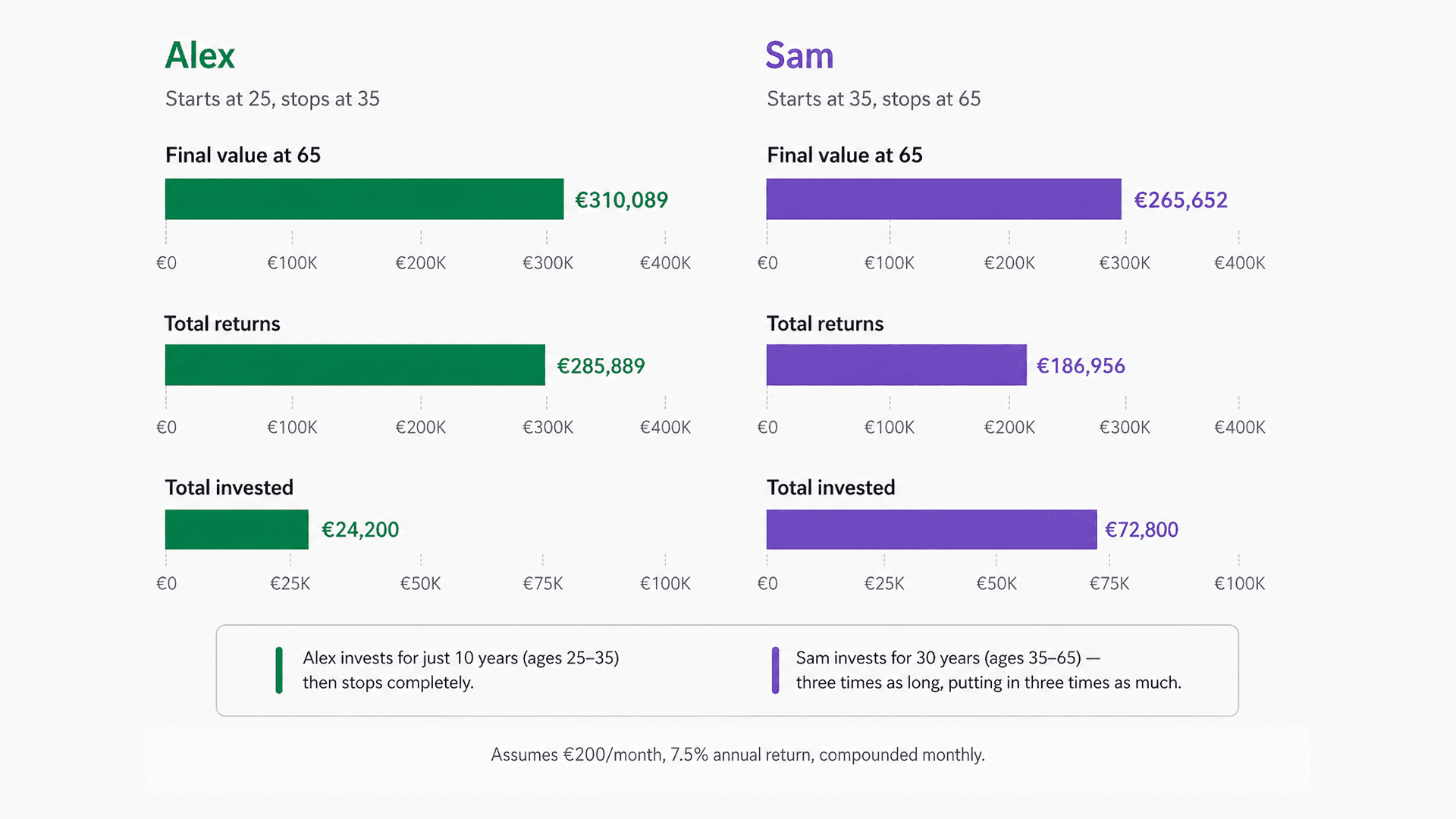
Arguably the most common mistake when starting to invest, is just not starting. There are so many fears when it comes to money that people try to pick their moment and don't just dive in. However, the sooner you start investing, the sooner it pays off. Particularly when factoring in compound interest, where your earnings earn returns.
Earnings on earnings = more earnings.
So, when investing, it's a good idea to find a trustworthy platform and get started. Even a small amount will give you a sense of how different investment assets perform and how volatile they are.
Don't invest in just one place or asset
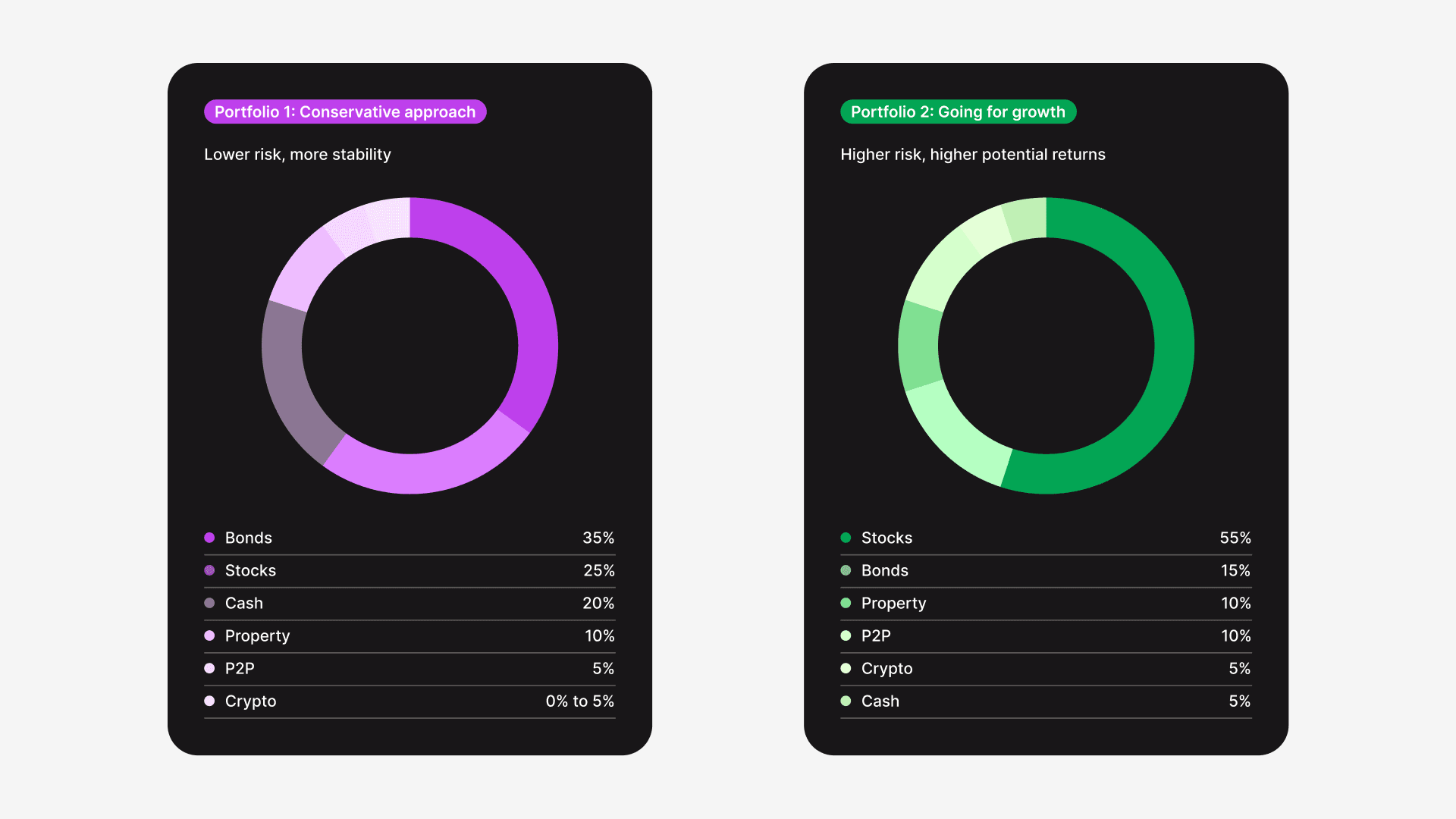
Once you're started, it's a great idea to diversify your portfolio early. This essentially means, don't put all your money in one place. If you have an asset that's performing, it can be easy to rely on it, or invest in similar businesses, but it's smart to branch out and buy a range of stocks or invest through different mechanisms.
Don't let emotions guide you
And when you're investing in a variety of assets, don't let your emotions make decisions for you. It can be thrilling when an asset gains value, or scary when it suddenly starts to drop, but investing is a long game. Do your research to understand if this is temporary or something which could last, and make an informed choice about whether you stick or twist. Generally, every stock will rise and fall over time, and you can't build wealth in moments.
Top tips from SmartSaver
Here are some pieces of advice we'd give to first-time investors who are looking to start making their money work for them:
- Diversify: Yes, we've said it twice. That's how important diversification is. Slowly build out your variety of assets, mix it up, and see what balance works best for you.
- Time in the market beats timing the market: Consistency and starting as early as possible lead to long-term growth. Just get started.
- Understand your risk appetite: Decide before investing how much volatility you can handle in your investments. Choose your assets based on historical and projected performance, and invest only as much as you're comfortable with.
- Think about long-term security: Build up an emergency fund, and make sure you have a pension that's quietly growing in the background. Investing is a great way to grow your wealth, but make sure you always have some savings to support you in case you need them.
- Always maintain liquidity: It's great to put some of your money into a long-term investment that offers better returns, or more expected returns, than volatile stocks at the cost of limited access. But it's always important to have investments that are easy to offload in case you need quick access.
- Consider SmartSaver: SmartSaver works best as an element of your portfolio. Our Main Account allows for easier access to investments with a 7.50% APY. Our fixed-term Vaults offer returns of up to 10.52% APY and are a great option for long-term growth.
Investing has evolved to become more accessible for more people than at any time in history. And there's a reason so many people are finding success through investments. If you're considering it, then join them today, and start investing with confidence.
*The information presented in this blog post is valid as of the time it is published. The content is intended to provide information only and is not meant and should not be considered as financial or investment advice of any kind.
*